Redding · Shasta County, CA · Updated September 2026
Storm Damage Tree Removal in Redding, CA
As of September 2026, a tree that has already fallen cleanly into open ground in Redding, with nothing under it, typically costs $150–$800 to remove — often less than a standing removal because there's no rigging — while a tree resting on a house, garage, or vehicle after a storm runs $1,400–$2,100 and up to $5,000 for a large tree needing a crane; December is Redding's wettest month and its storm-damage peak.
Sundial Tree Care · (530) 555-0142 · Free quotes from independent Redding-area tree removal providers.
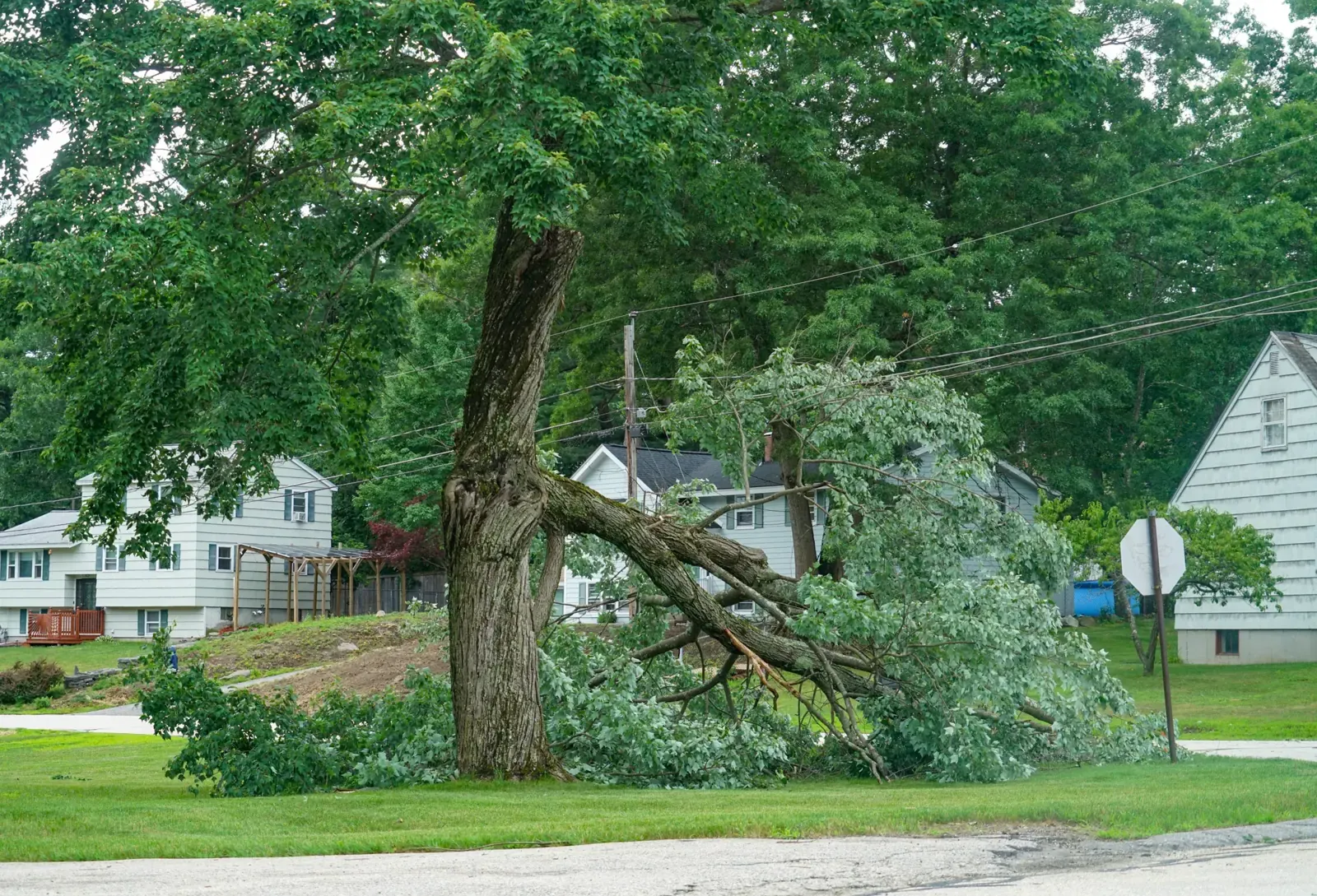
On a structure versus in open ground — very different situations
The single biggest thing that determines both urgency and cost after a storm is what the tree landed on. A tree or limb resting on a house, garage, fence, vehicle, or blocking a driveway needs a crew today — see our emergency tree removal guide for what to do first. A tree that fell cleanly into open ground, with nothing under it, is a different and usually cheaper job: often $150–$800, sometimes less than a standing removal of the same tree would have cost, because there's no rigging involved in taking apart something that's already on the ground.
Hangers: the damage that isn't done yet
A "hanger" is a limb that broke during the storm but is still caught in the canopy above — a walkway, driveway, deck, or play area. Hangers are deceptive because the storm has already passed and everything can look calm, but a hanger can drop with no further warning, sometimes days later, in perfectly still air. Treat anything hanging overhead with the same urgency as something already down.
Redding's two storm-damage seasons
Tree failures in Redding cluster around two very different times of year. The wet season — December is the wettest month, averaging about 6.8 inches of rain — saturates the soil right as the year's strongest south winds arrive, which is when root plates let go and oaks shed limbs they've carried all summer. The dry season — June through September, with July highs averaging 98°F — works differently: drought-stressed pines and cottonwoods drop limbs on windless afternoons with no storm at all, a pattern arborists call "summer branch drop," particularly in valley oaks. A tree that made it through last winter with a new crack or a fresh lean is the one to address before the next front, at the standard rate rather than waiting for it to become an emergency.
What it costs once the tree is already down
| Situation | Typical Redding cost |
|---|---|
| Tree down on a structure or vehicle | $1,400–$2,100 |
| Large tree on a structure, crane needed | $2,000–$5,000 |
| Already-fallen tree in open ground, nothing under it | $150–$800 |
The standard (non-emergency) removal range for context is $150–$3,000+, averaging about $700 — see the full cost guide for the size-by-size breakdown. No Redding company we reviewed publishes a separate storm-damage rate; the figures above reflect the same emergency-multiplier logic as our emergency page.
Insurance after a storm
Wind is almost always a covered peril. Most homeowner policies pay to remove a tree that damaged a covered structure, up to a per-tree or per-event limit, and pay little or nothing for a tree that fell in the open yard. Whose property the tree originally stood on matters less than people expect — your policy covers your own structures regardless, and a claim against a neighbor generally only works if they knew the tree was hazardous beforehand. Photograph the damage before any cutting begins, call your insurer before signing a large contract, and keep the itemized invoice. This is general information, not a substitute for reading your actual policy — see our neighbor tree law guide for the California specifics on liability.
Permits after storm damage
Storm-damaged trees frequently qualify for Redding's hazard exemption under RMC §18.45.040.G if a qualified professional confirms the tree is a danger — and most homeowners on a fully built single-family lot are exempt from the permit regardless of the tree's condition. Don't let paperwork delay clearing a tree off your house; keep photos and any written arborist opinion, and see our permit guide for the full rules.
Related
Emergency tree removal — the first-hour checklist for a tree actively on a structure or power line.
Hazardous tree warning signs — for a tree that survived the storm but looks worse for it.
Dead tree removal — for a tree the drought or beetles killed, storm or no storm.
- Connected with local tree service providers
- Fast removal, trimming & stump grinding quotes
- Shasta County storm-damage response experience
- No obligation to hire
FAQ
Storm Damage Tree Removal in Redding — Common Questions
The storm passed and a tree is down in my yard, but it didn't hit anything — is this urgent?
Less urgent than a tree on a structure, but don't ignore it. Check that no part of it reached a power line or fence line, then it's generally safe to schedule removal at the standard rate rather than paying an emergency premium — a cleanly fallen tree in open ground is often cheaper than a standing removal because there's no rigging involved.
Why do storms cause more tree damage in December than other months?
Redding's wet season saturates the soil right as the year's strongest south winds tend to arrive, and saturated soil is what lets root plates let go — December averages about 6.8 inches of rain, the wettest month of the year. Oaks that carried a full canopy through summer are especially prone to shedding large limbs once the ground softens.
Does storm damage happen in summer too?
Yes, in a different way. Redding's dry season (July highs average 98°F) stresses drought-weakened pines and cottonwoods until limbs drop on still, windless afternoons — arborists call this "summer branch drop," and it's a real risk in valley oaks especially, with no storm involved at all.
A limb is hanging in the tree but hasn't fallen yet — what do I do?
That's called a "hanger," and it can drop with no further warning, sometimes days after the storm that caused it, in perfectly still air. Keep people, pets, and vehicles clear of the area underneath it and treat it with the same urgency as an already-fallen limb — see our emergency tree removal guide.
Will my homeowner's insurance pay for storm-damaged tree removal?
Usually, if the tree damaged a covered structure — up to a per-tree or per-event limit in your policy. A tree that fell in the open yard and hit nothing is often covered little or not at all. Wind is almost always a covered peril regardless of whose property the tree stood on. Photograph everything before any cutting and call your insurer before signing a large contract. This is general information — your policy language controls.
Do I need a permit to remove a tree damaged in a storm?
Storm-damaged trees often qualify for Redding's hazard exemption (RMC §18.45.040.G) if a qualified professional confirms the damage makes the tree a danger, and most homeowners on a fully built single-family lot are exempt from the permit altogether regardless. Don't let a permit question delay clearing a tree off your house — sort the paperwork out afterward. See our permit guide.
Get matched with a local tree service pro
No obligation. We'll connect you with an independent local provider.