Redding · Shasta County, CA · Updated September 2026
How Much Does Stump Grinding Cost in Redding, CA?
As of September 2026, stump grinding in Redding, CA typically costs $100–$300 per stump — about $2–$6 per inch of stump diameter with a $100–$150 minimum charge — and each additional stump ground on the same visit adds only $30–$75.
Sundial Tree Care · (530) 555-0142 · Free quotes from independent Redding-area stump grinding providers.
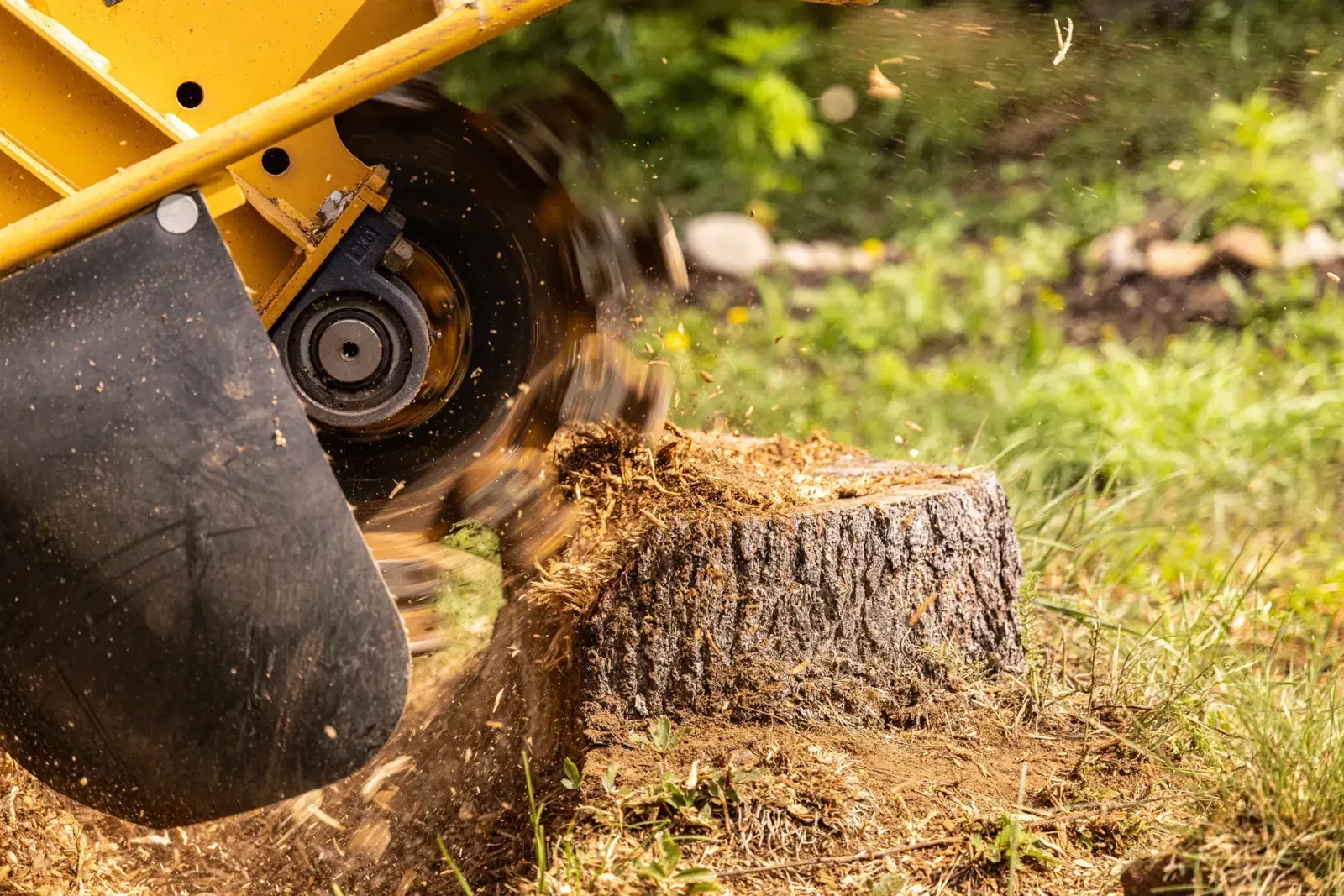
Stump grinding cost by stump size
Both Redding-area sources that publish a stump price land on the same $100–$300 range, and it lines up with the per-inch math in the two most recent national guides. The size table below is that reconciliation — measure across the widest point of the stump at ground level, root flare included.
| Stump diameter (with flare) | Typical Redding cost | Basis |
|---|---|---|
| 12 in diameter | $100–$160 | Angi 12 in $124–$160, floored at the $100 minimum |
| 24 in diameter | $150–$220 | Angi 24 in $148–$220 |
| 36 in diameter | $200–$300 | HomeGuide $70–$220 per-inch math is under the local $300 top; derived |
| 48 in+ diameter | $300–$800 | HomeGuide extra-large $300–$800 |
| How it's priced | Typical figure | Notes |
|---|---|---|
| Per inch of diameter | $2–$6/inch | The most common Redding pricing model; hardwood (oak) at the top, softwood (pine, cottonwood) at the bottom |
| Minimum / first stump | $100–$150 | Covers getting the machine to you — why a 6-inch stump costs about the same as a 12-inch one |
| Each additional stump | $30–$75 | Same visit only; the reason to do them all at once |
| Extra-large (36 in+ or dense hardwood) | $300–$800 | Needs a larger, tracked grinder; check gate width |
| Grindings raked and hauled away | $50–$200 | Leaving them in the hole as fill is free |
| Full root removal (hourly) | $100–$200/hr | Only for building or paving on the spot — see below |
| DIY grinder rental | $100–$400/day | Rental-yard machines are small and slow; rarely cheaper than hiring for one stump |
What moves a Redding stump quote
Diameter, including the flare. The single biggest factor, and the one homeowners most often under-measure. A 20-inch trunk usually has a 28–32-inch flare at grade.
Species. Blue oak, valley oak, and black walnut are dense; a grinder moves through them at a fraction of the speed it moves through a pine, cottonwood, or mulberry stump. Expect the top of the per-inch range on oak.
Age. A stump that's been rotting for five years grinds fast and cheap. A fresh oak stump is the hardest job on this page.
Depth. Standard grinding goes 6–12 inches below grade — enough for lawn and shallow planting. Grinding deeper for a foundation, patio, or fence post is priced up, and at some point becomes removal.
Access. A walk-behind grinder fits through a 36-inch gate; the tracked machines for big hardwood stumps need more. Rocks, buried concrete, and an old fence line in the roots slow everything down and dull the teeth — mention them.
Count. The first stump pays for the trip; every one after that is cheap. A Redding lot with a row of dead ornamentals is the ideal grinding job.
Grinding vs. full removal
Grinding chews the stump into chips 6–12 inches below grade and leaves the root system in the ground to rot over several years. You get a shallow hole full of wood chips that settles as they decompose; scoop them out, backfill with soil, and it's lawn again in a season. This is what nearly every residential job should be.
Removal digs out the stump and main root ball, usually with an excavator, leaving a hole that can be several feet across and deep and that needs imported fill. It's a much bigger, more expensive job — priced hourly at $100–$200 plus equipment — and it's only worth it if you're pouring a slab, setting a foundation, or running a utility trench through the exact spot. If a company quotes "stump removal" for a lawn, ask whether they mean grinding; most do.
Getting a fair quote (5 steps)
Measure across the widest point at ground level. Include the root flare — the wide, buttressed base — not just the trunk. That's what the grinder has to remove.
Count every stump on the property. Additional stumps on the same visit are a fraction of the first-stump price. Get them all done at once.
Note the access. Most grinders fit through a 36-inch gate; the big ones for hardwood stumps don't. Measure your narrowest gate.
Decide what happens to the grindings. Left in the hole as fill (free), raked out and hauled (extra), or kept as mulch elsewhere in the yard.
Call 811 before the appointment. Free utility locating, required by law before excavation, two working days' notice.
After the stump is gone
The grindings are fresh wood chips, and fresh chips tie up nitrogen as they decompose — grass or a new tree planted straight into them will sulk for a year. Rake the chips out (they make fine mulch for beds elsewhere), backfill with soil, and seed or plant. For a replacement tree, plant a few feet off the old spot so the new roots aren't fighting the old ones. If you're replacing a native oak that had to come out, the City of Redding's tree planting rules (Municipal Code Chapter 18.45) can require replacement trees on permitted removals — the permit guide covers when that applies.
One Redding-specific note: on hillside lots and along the river bluffs, a big root system holds soil. Grinding is fine — the roots stay and rot slowly — but full removal on a slope is something to run past whoever does your drainage before you do it.
Bundle it with the removal
If the tree isn't down yet, the cheapest path is one quote with two lines: removal ($150–$3,000+ in Redding, averaging about $700 — see the removal cost guide) and grinding. Companies that run their own grinder will often price the stump at or near the additional-stump rate when they're already on site; companies that subcontract grinding will pass through a separate first-stump charge. Ask which it is.
Sources
Local: reddinglandclearing.com and reddingtreetrimming.com (templated cost pages, both publishing $100–$300; weighted lightly), easydoesittreeservices.com (service page, no published stump price). National: HomeGuide — Tree Removal Cost (updated Feb 4, 2026), Tree Trimming Cost (Jan 13, 2026), Stump Grinding Cost (Dec 22, 2025); Angi — Tree Removal Cost (updated Jul 8, 2026), Stump Grinding Cost (Mar 17, 2026). Local ranges pulled Sept 10, 2026; national guides re-read Sept 12, 2026. Ranges labeled "derived" are our reconciliation of local and national figures, not a quoted price.
- Connected with local tree service providers
- Fast removal, trimming & stump grinding quotes
- Shasta County storm-damage response experience
- No obligation to hire
FAQ
Stump Grinding in Redding — Common Questions
How much does stump grinding cost in Redding, CA?
As of September 2026, $100–$300 for a typical residential stump, priced at roughly $2–$6 per inch of diameter with a $100–$150 minimum. Extra-large hardwood stumps over three feet across run $300–$800.
How do I measure my stump for a quote?
Measure the widest point across the top of the stump at ground level, including any flared roots the grinder will have to chew through — companies measure the flare, not the trunk. A 20-inch trunk with a 30-inch root flare is quoted as a 30-inch stump.
Is stump grinding included in tree removal?
Almost never. Removal quotes cover cutting the tree to a low stump and hauling the wood; grinding is a separate line, often a separate visit with different equipment. Ask for both on the same quote — grinding while the crew is already on site is where the additional-stump discount comes from.
What is the difference between stump grinding and stump removal?
Grinding chews the stump into chips 6–12 inches below grade and leaves the roots to rot; the hole is filled with the grindings and settles over a year or two. Removal digs out the stump and the main root ball — a much bigger job with an excavator and a large hole to fill — and is only worth it if you're building or paving on the exact spot. For a lawn or a replant, grinding is the answer.
Can I plant a new tree where the stump was?
Not right away in the same hole. The grindings are wood chips that tie up nitrogen as they decompose, and the old roots are still there. Scoop out the chips, backfill with soil, and plant a few feet off the old spot — or wait a year. Grass can be seeded on new soil right after the chips are removed.
Do I need to call before digging or grinding?
Yes — call 811 (Underground Service Alert) at least two working days before grinding; it's free, and a grinder hitting a gas line or a buried electric service is exactly the accident it prevents. Any professional crew will require it. Irrigation lines and low-voltage lighting aren't marked by 811, so point those out yourself.
Get matched with a local tree service pro
No obligation. We'll connect you with an independent local provider.