Redding · Shasta County, CA · Updated September 2026
Tree Trimming & Pruning in Redding, CA
As of September 2026, tree trimming in Redding, CA typically costs $250–$600 for a routine trim on an average residential tree, $600–$1,200 for a 30–60 foot tree, and $1,000–$2,500+ for trees over 60 feet; structural pruning runs $200–$500, and most mature trees only need it every 3–5 years.
Sundial Tree Care · (530) 555-0142 · Free quotes from independent Redding-area tree trimming providers.
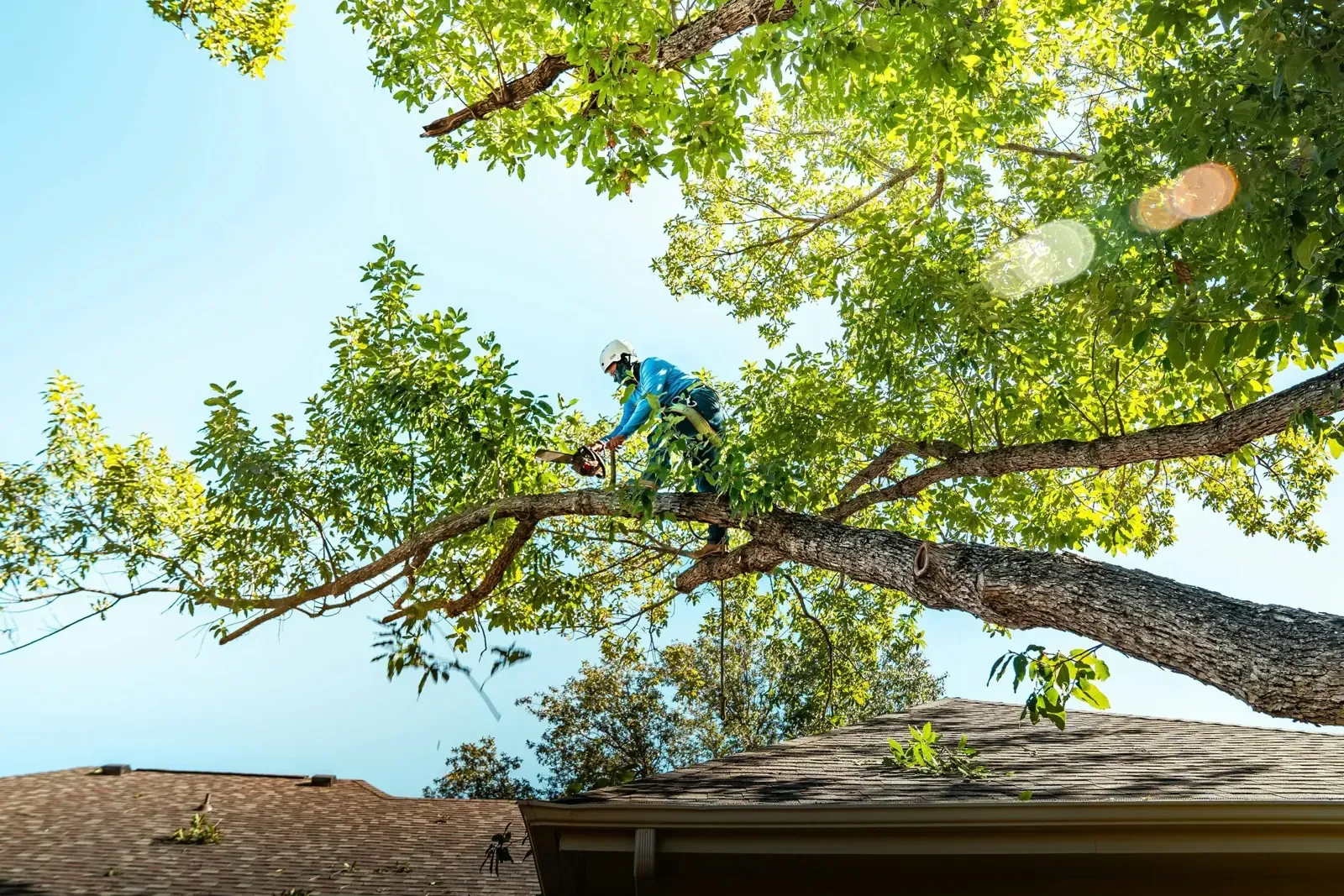
Trimming vs. pruning — the distinction that changes the quote
Redding companies use the two words interchangeably in their ads, but they're different jobs, and knowing which one you're asking for gets you a better price and a healthier tree.
| Trimming | Pruning | |
|---|---|---|
| Goal | Size, shape, clearance, appearance | Health and structure of the tree |
| What comes off | Overgrowth, limbs over the roof or driveway, lower limbs for headroom | Dead, diseased, rubbing, or weakly attached limbs; competing leaders |
| When | Any time the tree isn't stressed; usually every 3–5 years | Dormant season for structure; dead wood any time |
| Who | Any competent, licensed crew | Ideally an ISA Certified Arborist making or directing the cuts |
| Typical Redding cost | $250–$600 | $200–$500 |
A single visit often does both — dead wood out, then clearance — and that's fine. What you want to avoid is paying for "a trim" and getting a tree that's been hacked back to stubs (see topping, below).
What tree trimming costs in Redding
Only one Redding-area source publishes trimming prices — a templated cost page at $250–$600 for trimming and $200–$500 for pruning — so we anchor that against the most recent national guide (HomeGuide, updated January 2026), which prices by height:
| Tree height | Typical cost per tree | Basis |
|---|---|---|
| Up to 30 ft | $250–$700 | HomeGuide national, 2026-01-13 |
| 30–60 ft | $600–$1,200 | HomeGuide national, 2026-01-13 |
| 60 ft and taller | $1,000–$2,500+ | HomeGuide national, 2026-01-13 |
| Debris haul-away (if not included) | $75–$250 | HomeGuide national |
Two things worth knowing about that table. The floor is real — a small ornamental can be as little as $80 if the crew is already on the street. And the top is real too: a neglected 70-foot valley oak that hasn't been touched in fifteen years is a full day for a climber and can exceed the $2,500 top of the 60 ft+ bracket. The tree removal cost guide covers the case where trimming isn't enough — removal starts around $150 for a small tree.
What moves a trimming quote: height (a climber vs. a pole saw from the ground), how much is coming off (a light clearance trim vs. a full crown clean), whether the tree is over a roof or line, access for the chipper, and whether the crew is hauling the brush or leaving it. Get the haul-away line stated separately.
What a proper cut looks like — and the one thing never to allow
You can check a crew's work from the ground. A proper pruning cut is made just outside the branch collar — the slightly swollen ring where a limb meets the trunk — not flush with the trunk and not leaving a stub. It's a clean cut, not torn, and on a big limb it's done in three steps (an undercut, a top cut further out to drop the weight, then the final cut at the collar) so the bark doesn't strip down the trunk. No paint or sealant; the tree closes the wound itself.
The thing never to allow is topping: cutting main limbs back to stubs to make a tree shorter. Every arborist standard rejects it. The tree responds with a thicket of weakly attached water sprouts, every stub becomes a decay entry point, and within a few years the tree is more hazardous than before and looks worse. If a tree is genuinely too tall for its spot, the honest options are crown reduction by a certified arborist — cutting back to lateral limbs that can take over as the new leaders — or removal. A Redding crew that offers to "top it for you" is telling you something about the rest of their work.
Timing in Redding's climate
Dormant season (roughly December–February). The best window for structural pruning on deciduous trees — maples, ash, mulberry, fruit trees, crape myrtle. The branch structure is visible and the tree heals fastest going into spring growth.
Dead wood: any time. Dead limbs can come out whenever they're noticed; there's no season for removing wood that's already dead, and after a windy week is a good time to look.
Peak summer: light touch only. With July highs averaging 98°F, heavy cuts in mid-summer expose bark that's never seen direct sun and stress a tree already working hard. Clearance trimming is fine; major reductions aren't.
Native oaks: less is more, and get an arborist. Blue oaks, valley oaks, and interior live oaks tolerate light, well-timed pruning and resent heavy cuts. Removing more than a modest share of a mature oak's live canopy in one go is a way to start its decline. These are the trees the City's ordinance was written to protect during development, and they're worth an ISA Certified Arborist's judgment rather than a general crew's.
Defensible space season (spring). Shasta County's defensible-space rules for unincorporated properties are the reason a lot of Redding-area trimming happens in April–June: limbing up to about 6–10 feet, breaking up ladder fuels, and separating canopies from the roof. If you're outside city limits, the county's Stay Ready Shasta program and the Fire Safe Council's free chipping days (see the assistance page) fit this work exactly.
Trees near power lines
Nothing within about ten feet of an energized line is a private tree crew's job. Line-clearance work is done by utility-qualified crews — Redding Electric Utility inside city limits, PG&E in the rest of Shasta County — and both utilities run vegetation-management programs and will assess a tree reported as threatening their lines (Redding Electric Utility has a "report a tree in power lines" page on cityofredding.gov). Report the tree to the utility first; a private crew can do the house side of the canopy after the line side is cleared. The service drop to your own house is a gray area — the utility maintains the line, but clearance around it is often the homeowner's; ask REU or PG&E which applies before hiring anyone.
Licensing for trimming work
California's CSLB C-49 "Tree and Palm Contractor" classification covers trimming and pruning as well as removal. The state's minor-work exemption lets an unlicensed person do a job under $1,000 total that needs no permit — which does cover a lot of small trims — but a full-day crown clean on a big oak is well past it. For anything a climber is involved in, verify the C-49 number at cslb.ca.gov and ask for proof of workers' compensation; a fall from a tree on your property without coverage is your problem. The licensed-and-insured checklist has the exact questions.
Trimming a neighbor's tree
You may trim branches that cross onto your property back to the line, at your own expense, as long as you act reasonably and don't injure the tree — and you can't go onto the neighbor's land or up their trunk to do it. Wrongful injury to someone else's tree carries double or treble damages under California Civil Code §3346, so on a big oak, "reasonable" means a certified arborist's cuts, not a chainsaw at the fence. Not legal advice — see the neighbor tree law guide.
Sources
Local: reddingtreetrimming.com (templated cost page — the only local source publishing trimming figures; weighted lightly). National: HomeGuide — Tree Removal Cost (updated Feb 4, 2026), Tree Trimming Cost (Jan 13, 2026), Stump Grinding Cost (Dec 22, 2025). Local ranges pulled Sept 10, 2026; national guides re-read Sept 12, 2026. A second national source for trimming specifically was unavailable at this recheck and is flagged for the next one.
- Connected with local tree service providers
- Fast removal, trimming & stump grinding quotes
- Shasta County storm-damage response experience
- No obligation to hire
FAQ
Tree Trimming in Redding — Common Questions
How much does tree trimming cost in Redding, CA?
As of September 2026, about $250–$600 for a typical residential tree, rising to $1,000–$2,500+ for a large tree over 60 feet. Nationally the average is around $650 per tree. Height, how much is being removed, and whether a climber is needed set the price.
What is the difference between tree trimming and pruning?
Trimming is about size, shape, and clearance — keeping a tree off the roof, away from lines, or looking tidy. Pruning is about the tree's health and structure — removing dead, diseased, crossing, or poorly attached limbs. The cuts look similar; the goals and the timing differ, and a good arborist will tell you which one your tree actually needs.
When is the best time to trim trees in Redding?
For most deciduous trees, late winter dormancy (January–February in Redding) — the structure is visible and the tree heals fastest going into spring growth. Dead wood can come out any time. Avoid heavy cuts in the peak of summer heat, and avoid pruning native oaks hard at all; light, well-timed cuts are what they tolerate.
Should I top my tree to make it shorter?
No. Topping — cutting main limbs back to stubs — is the one practice every arborist standard rejects. It produces weakly attached water sprouts, invites decay at every stub, and makes the tree more hazardous within a few years, not less. If a tree is genuinely too big for its spot, crown reduction by a certified arborist or removal are the honest options.
My tree is near a power line — can a tree service trim it?
Not the part near the line. Vegetation around energized lines is the utility's responsibility and is done by utility-qualified line-clearance crews — Redding Electric Utility inside city limits, PG&E elsewhere in Shasta County. Report the tree to the utility; a private crew can handle the rest of the canopy once the line side is cleared.
Does trimming a tree need a permit in Redding?
No. Redding's tree ordinance (Municipal Code Chapter 18.45) regulates removal, not routine trimming or pruning. The one caveat is a tree on the City's Landmark and Heritage Tree Plan or a tree a development approval required to be preserved — "damage" to a protected tree, including topping, can be treated as a violation. Street trees in the public right-of-way are the City's.
Get matched with a local tree service pro
No obligation. We'll connect you with an independent local provider.